Missile defense
Fast, bright, transient events are where event sensing is strongest. We are pursuing missile warning and tracking as research. No results are published yet.
Applications / Space domain awareness · missile defense research
Event sensing for space domain awareness, from the ground and on orbit. Map the stars, separate the movers, and send tracks instead of pictures.
The problem
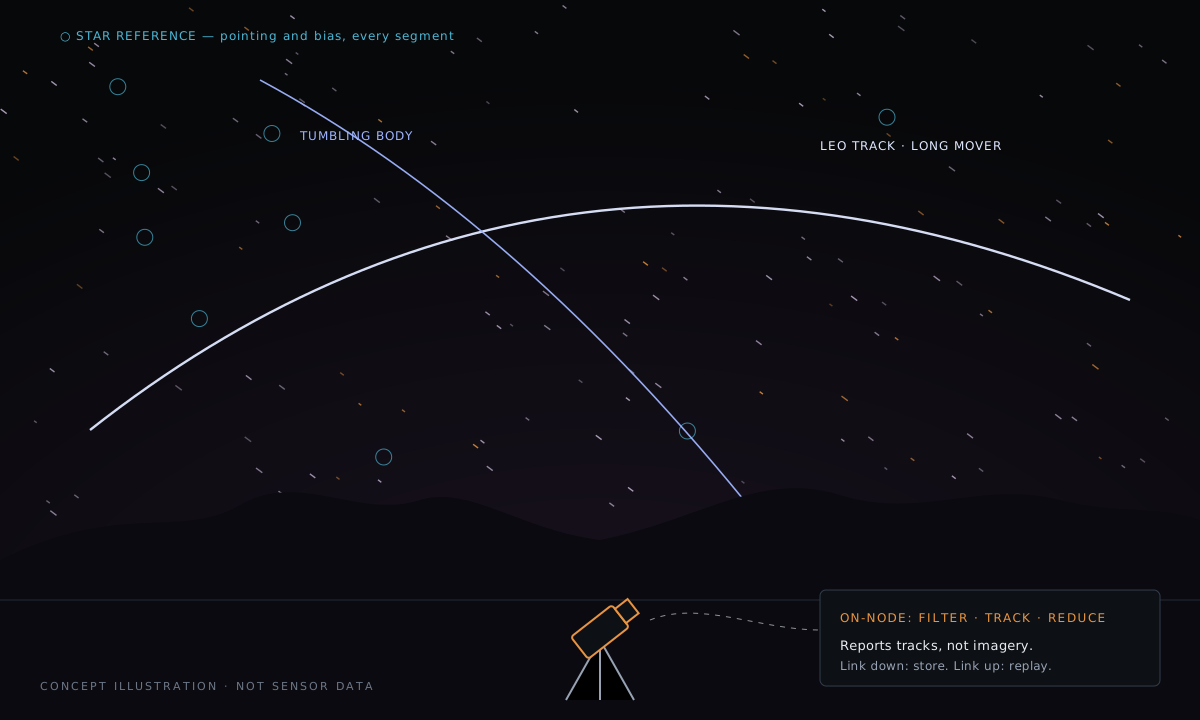
Most of the sky does not change from one moment to the next. A frame imager still spends power, storage and downlink on every pixel of it, which is what makes persistent watch from small platforms expensive.
An event sensor spends almost nothing on sky that is not changing, and its output is already close to a track.
Why event sensing
Evidence
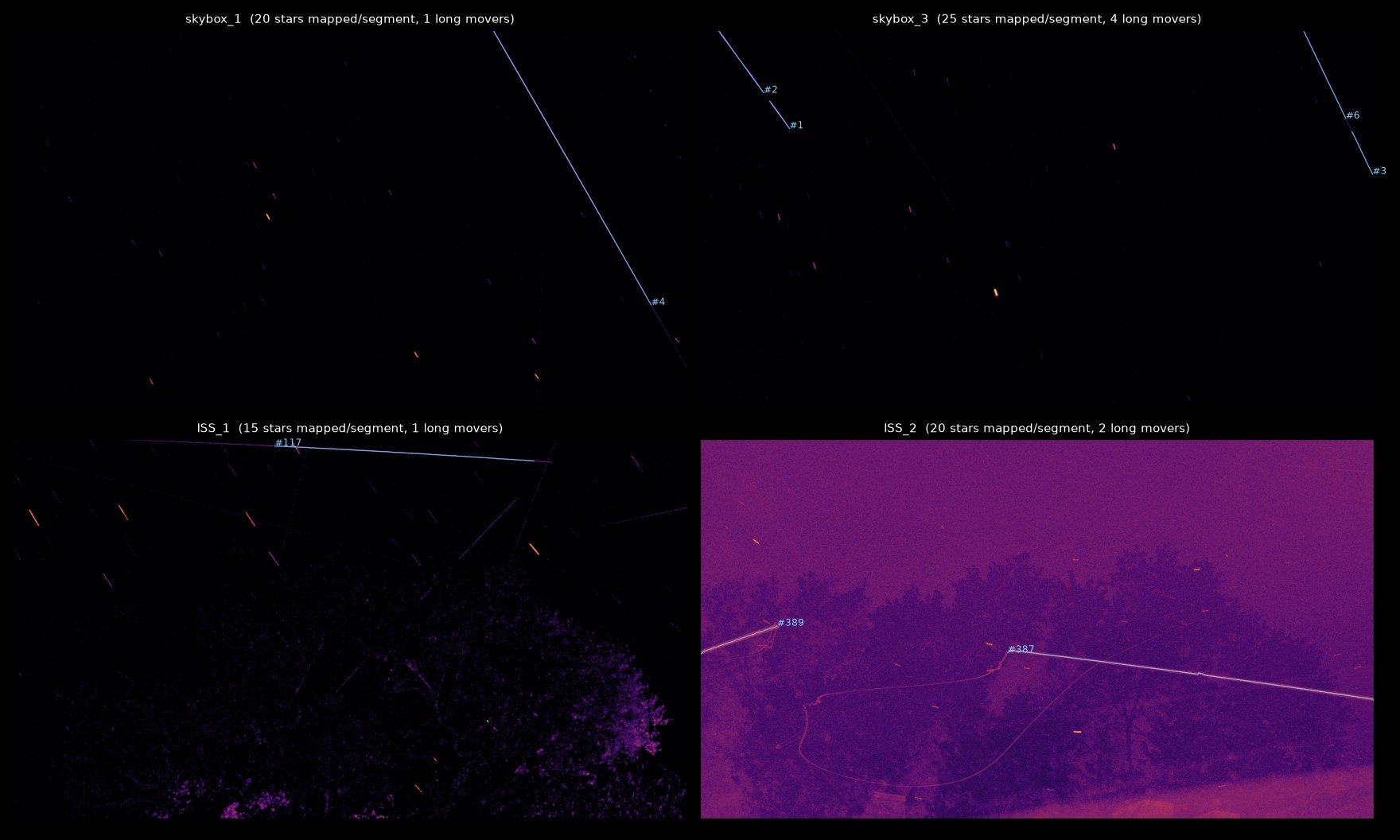
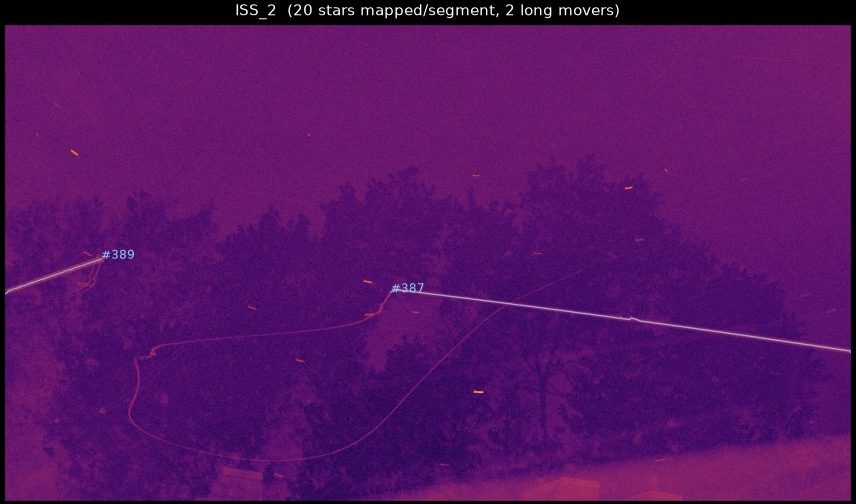
In October 2026 our team tracked the International Space Station and several other LEO objects, including tumbling rocket bodies, from the ground with a 16 mm lens. Each panel is a separate recording.
Fast, bright, transient events are where event sensing is strongest. We are pursuing missile warning and tracking as research. No results are published yet.
The same node design, sized for a small spacecraft: on-board detection and tip-and-cue, at a power and downlink budget that makes persistent watch affordable.
If size, power, cost or a frame sensor’s limits are what stand between you and the requirement, we would like to hear about it.